


In the flickering shadows of the Kannada Film Industry (KFI), where the "grind" has long been a badge of honor and the sets are often fueled by adrenaline and architectural masculinity, a quiet metamorphosis is taking place. At the center of it is Advaitha Gurumurthy—a man whose lens has captured the vast, blue melancholia of Saptha Sagaradaache Ello, but whose most significant work might just be the ecosystem he is building behind the camera.
Cinema, for all its progressiveness on screen, has long been conservative behind it. Roles are often gendered—women in costume or makeup, men in lighting, camera, or direction. Advaitha didn’t set out to correct this. He simply didn’t accept it.
"We don't just lens a story; we host it," Advaitha says, leaning back. In Edition 03 of ArtsKonnect, we are exploring "The Shift," and there is no shift more radical than Advaitha’s decision to build a women-led crew. But don't mistake this for a diversity quota. For Advaitha, this is an infrastructure of excellence.
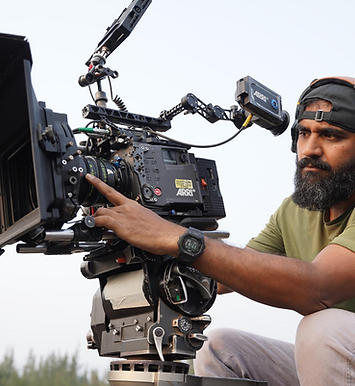
His approach was practical. If women couldn’t enter these spaces because infrastructure didn’t exist, then it had to be created: a separate caravan, access to clean restrooms, a baseline of dignity. The set becomes a space for relearning. When the crew isn't fighting for basic professional dignity, they are free to fight for the perfect shot. It is a shift from the industrial to the intentional.
His core idea is that a technician who feels safe, respected, and physically comfortable will always produce a more nuanced frame.
When I asked Advaitha what changes when women are part of a cinematography team?
He said nothing and everything. Funny, I know!
But he then explained
“In terms of work? Nothing changes.
In terms of emotional space?
Everything changes.”


Cinematography is physically demanding, but also emotionally exacting with long nights, constant pressure, creative vulnerability. What his team has built is not just efficiency, but emotional infrastructure: a space where exhaustion can be voiced and where frustration is not viewed as weakness.
Inside his team, the equation feels almost resolved. Outside it, the reality shifts. For many women, the challenge is not entry—but authority. Being trusted as heads of departments. Being seen as decision-makers.
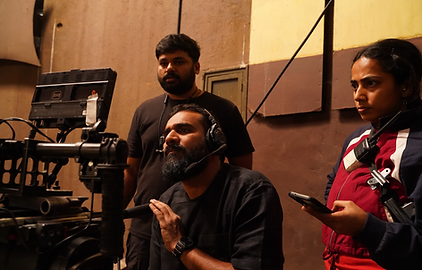
"It's easier for a man to trust another man. They’re not used to us yet." Says Deepika.

Within the team, hierarchy is functional, not cultural. There are titles—first assistant, second assistant—but they do not define power. Everyone contributes, everyone is visible, and even credits reflect this—no ranking, just names.
Inclusion is often framed as difficult, expensive, disruptive, or inconvenient. Advaitha dismantles that entirely. He says women doing the work is never the problem, getting the men and other people out of their conditioning is where the challenge lies. On set, resistance rarely lasts.
A day or two of adjustment, and then the work speaks for itself. Once the lights are set and systems run - skepticism automatically fades.
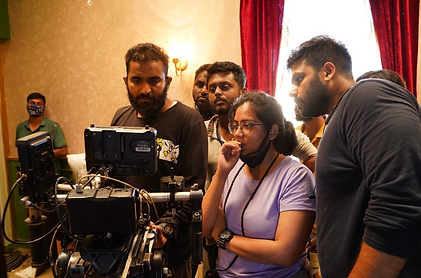
The Economics of Passion
Beneath the idealism lies a harder truth. Cinema, especially early on, is financially unstable. Payments are inconsistent. Work is freelance.

Everything comes down to paying rent - Says Ruchika!
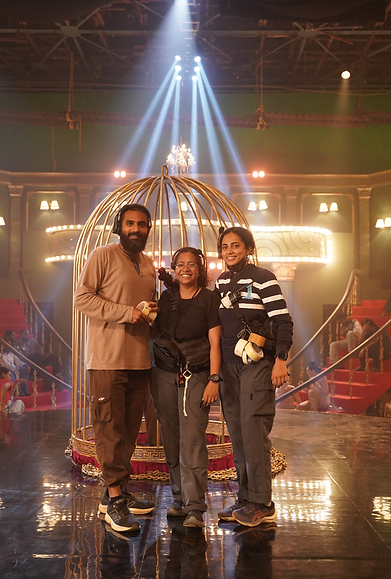
Passion sustains the work but not the system. What’s needed is continuity, fair pay, and structure. Advaitha is clear that he isn't just creating impact; he is simply looking for a good team. And yet, impact is inevitable. When one set functions differently, it becomes a reference point for the entire industry.
Advaitha isn't waiting for the industry to change its script; he’s simply proving that when you build a set with room for everyone to breathe, the art finally has room to speak.


