


It has been two years since I stepped onto a proscenium stage. But for me,
that has not meant stepping away from theatre. If all the world’s a stage, I have found theatre far more alive outside four walls.
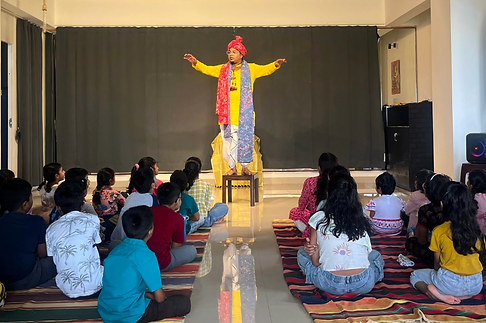
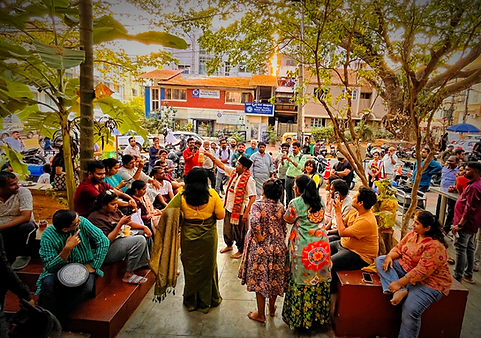
Over the past couple of years, I have focused on alternate spaces where the essence of the art feels raw and intimate. This initiative began during COVID, when auditoriums were shut but artists wanted their practice to stay alive. Our team started performing on house terraces, in home gardens, and in apartment lobbies for invited audiences. We travelled to villages and created special performances for children there.
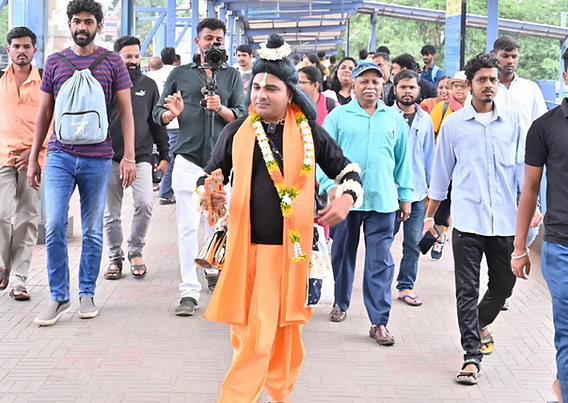
One such experiment was a walk-along performance—travelling with audiences in the metro and through the streets as stories unfolded with the city—part of the IFA-supported project 'Namma Majestic Yatre'.
There were also café performances like Theatralicious (Coffee Tales)—interactive sessions combining music jamming, coffee decoction art, storytelling, and even learning latte art. Terrace gatherings where food was prepared and served live while stories connected to the dish were enacted. Summer evenings revisiting grandmother’s home through storytelling and demonstration about the process of pickling and sandige.
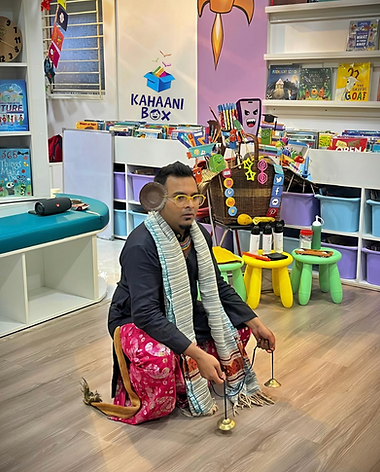
Children’s storytelling in bookstores and clubhouses. Street plays for World Theatre Day. Corporate wellness programs using theatre tools.

These are not merely experiments in form. They are experiments in connection and sustainability.
Sustainable Theatre in Practice:
This model needs very little: no elaborate sets, no heavy lighting, minimal makeup, suggestive costumes, and almost no publicity material. Most productions are handled by me or a small team of three committed practitioners. Costs are low, travel is light, and audience interaction is direct and personal. As a full-time theatre practitioner in Bengaluru, this approach has helped me keep the art alive while staying rooted in the city and its people.


Bengaluru Theatre scenario:
Bengaluru’s theatre scene is vibrant. Every weekend, auditoriums are booked and audiences arrive with enthusiasm. Broadly, three parallel streams shape the present:
1) Senior legacy groups
Teams with 40–50 years of history continue staging landmark productions, some running between 500 and 1000 shows. Audiences support them loyally; familiar titles and celebrated artists draw crowds.
At the same time, certain process concerns are visible: limited rehearsals for long-running plays due to rotating casts, hierarchical functioning, and very little financial support for artists—sometimes not even basic travel allowance. Simple care, like providing refreshments for artists who come directly from work, can be overlooked. In some spaces, team handling becomes difficult due to rigid leadership styles. A few groups seem to run productions mainly to access grants and funds. There is a need for some senior teams to revisit and restructure their approach before age and time naturally phase out their leadership.
2) Post-COVID young teams
Many energetic teams emerged after COVID with passion and experimentation. Over time, a shift occurs: several young actors enter theatre aspiring for film and television careers. This is understandable. Yet, some leave education or stable jobs hoping acting alone will sustain them. The gap between artistic hope and practical life can be harsh.
Some move into dubbing or other jobs; a few find stability, many continue navigating uncertainty. Commitment challenges, time discipline, and irregular attendance at rehearsals are common struggles, often attributed to the city’s traffic and pace. This creates pressure on directors and team managers. Professional discipline is an area many teams and artists are still learning to strengthen.

3) College Theatre — a strong new hope
In recent years, many educational institutions have invested seriously in campus theatre. Professionals are invited to direct plays, generous budgets are allocated, and intercollegiate festivals and carnivals draw large student participation. This movement is nurturing future practitioners and bringing a vibrant young audience into mainstream theatre. This is a heartening sign.
Unspoken Concerns:
Alongside growth, there are quieter concerns. Around some theatre spaces, unhealthy habits, backtalk, character criticism, and rigid ideologies can create a difficult environment. A few senior artists from earlier decades, once in the limelight, now face financial and personal hardships. These realities affect mental health and the overall atmosphere.
Theatre is not just a mirror to society; it also has the power to redefine and reshape what it presents. But if those who create it—playwrights, directors, actors, technicians—carry rigid, propaganda-driven views, the work risks becoming noise rather than truth. In a time marked by unrest, what we need is clarity, not more noise. If there is peace in the minds of creators, perhaps audiences too will learn to become peacemakers.
These are personal reflections. I am part of this ecosystem—both a witness and a participant, a victim and a culprit of mistakes. This is introspection, not accusation.
Returning to Hope:
Despite everything, theatre in Bengaluru continues to be a smile between many struggles.
It teaches empathy, listening, inclusion, and sensitivity. It offers a ray of hope and reminds us to care for our mental health.
Theatre is a lifeline. Perhaps it only needs a gentle refresh button!


About the author:
Chandra Keerthi
Is a seasoned theatre practitioner with over 23 years of experience and an MSc in Electronic Media graduate from Bangalore University. He has acted in 37 plays, directed 20 productions, and performed in over 400 shows. Chandra has worn many hats in the theatre world, excelling as an actor, director, and facilitator.
Specializing in children's theatre, he also conducts storytelling sessions at schools and libraries. One of his career highlights includes directing Caucasian Chalk Circle, which was staged at the prestigious National Theatre Festival META in New Delhi. Recently awarded the GCU Puraskar 2024, he is also pioneering 'Theatre at Your Doorstep,' an innovative initiative that brings performances to alternate spaces. As the founder and creative director of 'Theatre Artistree,' Chandra is dedicated to crafting transformative experiences through the performing arts.


